
Have they #ConsentEd?
Consent Education Campaign
Consent & Health (Pandemic)
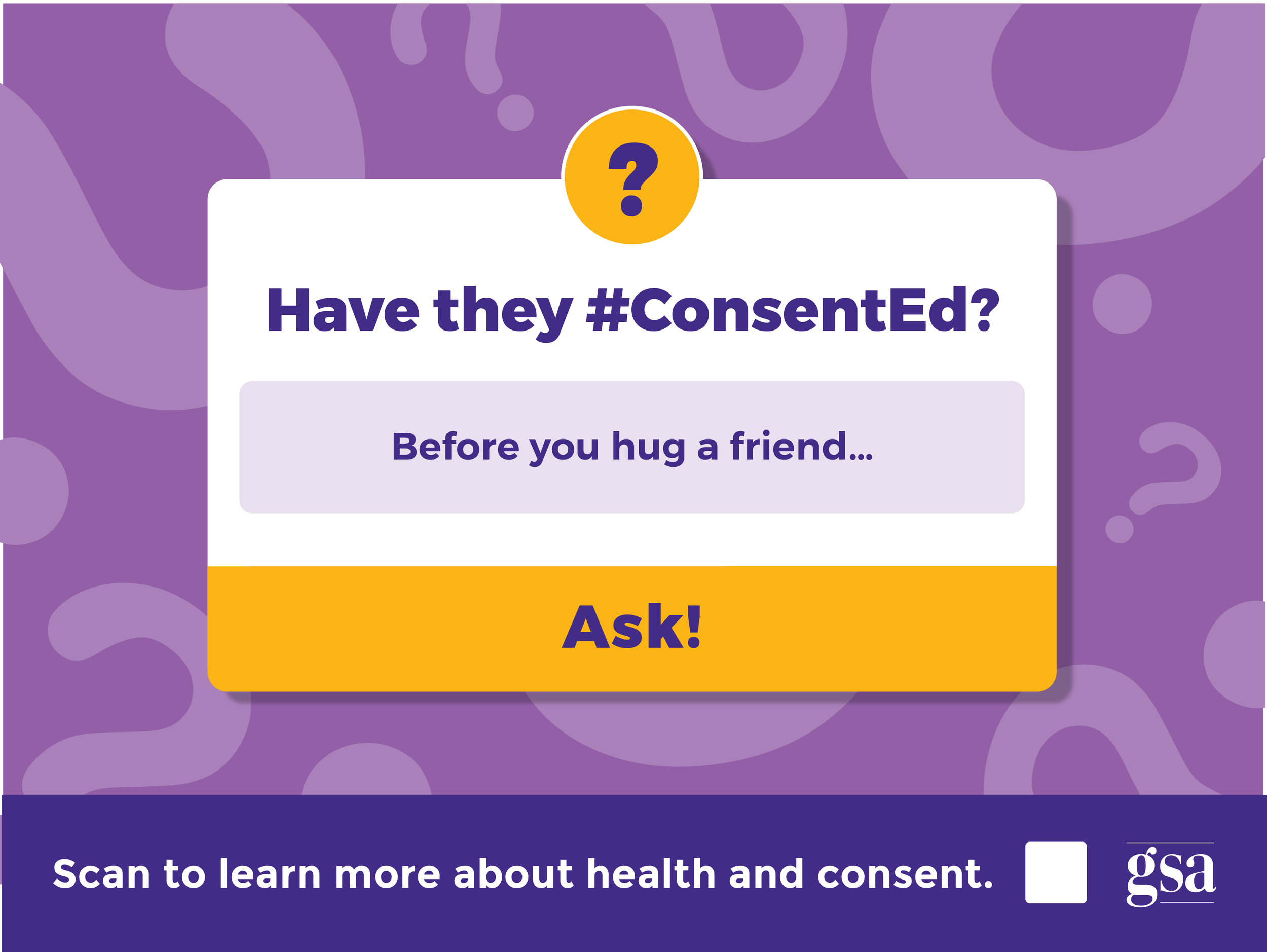
Stay Safe. Stay in person. As we navigate our return to our campuses and other academic locations, health related consent topics come into focus. Before you shake hands or offer a hug, Pause. ASK. Listen. Respect. For more information please visit Laurier’s Covid-19 response page.
Responding to Disclosure
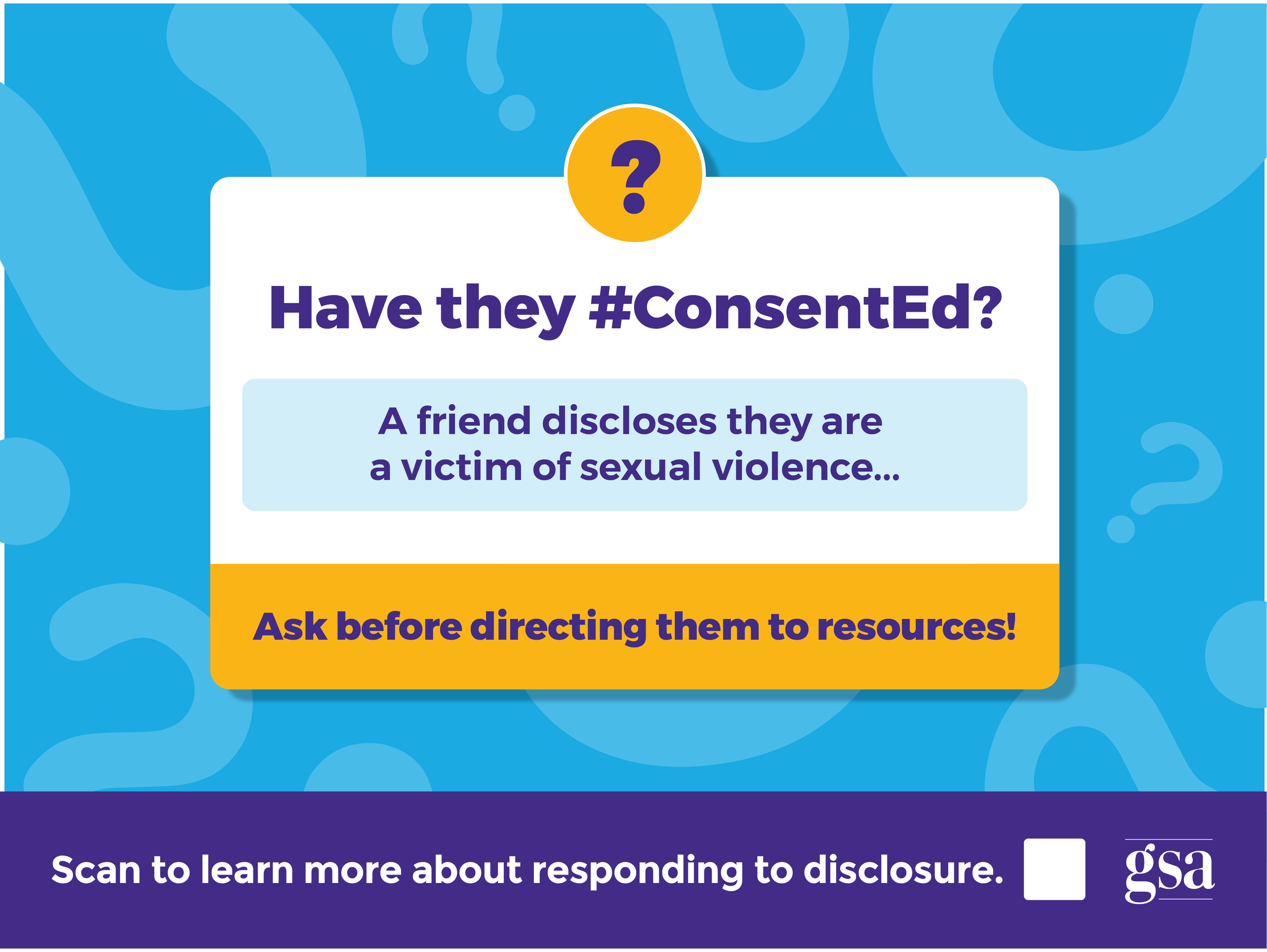
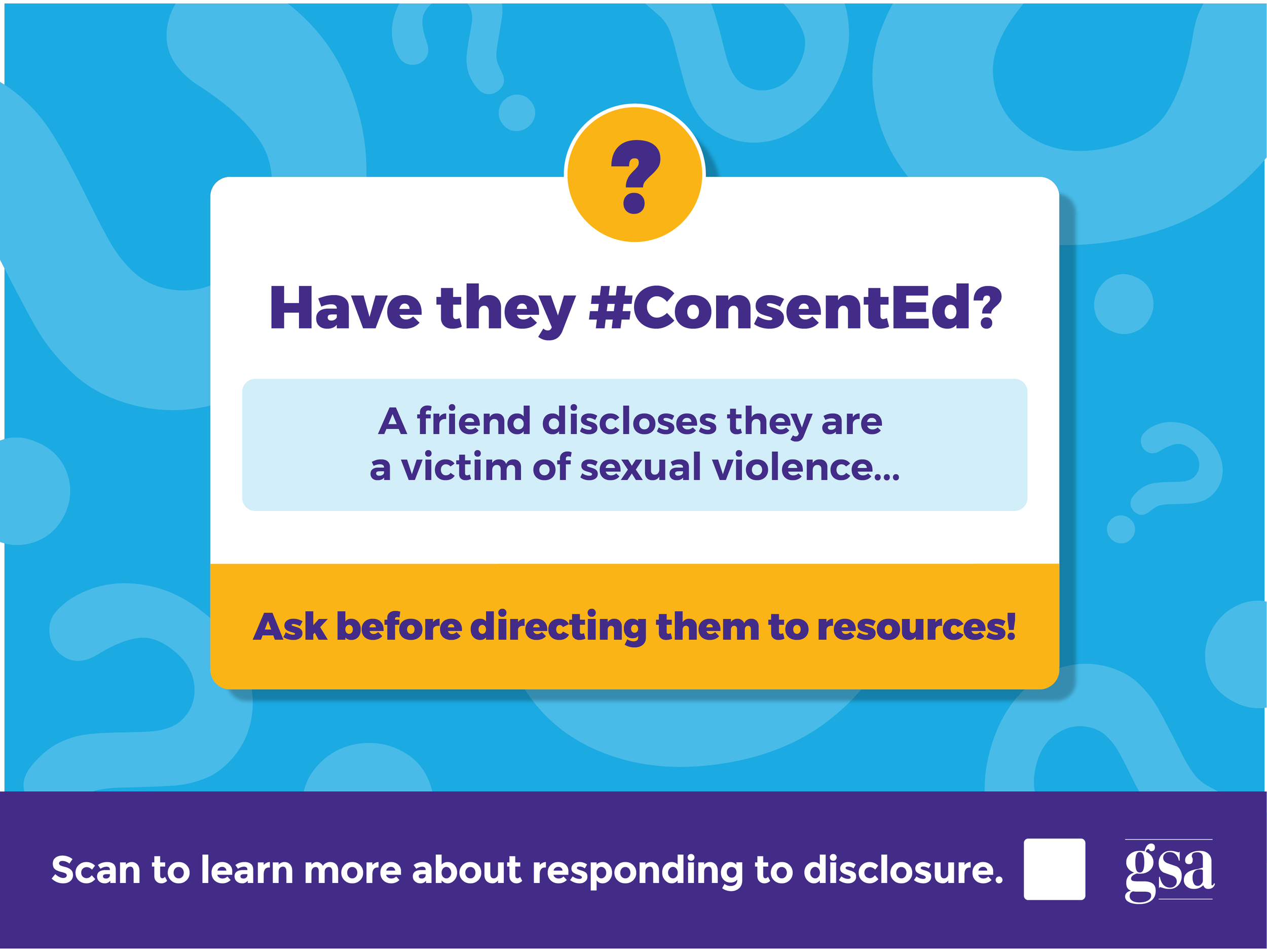
Did you know there are many ways in which people might respond unsupportively to a disclosure of violence? Some of these unsupportive responses include victim blaming, encouraging the survivor to keep the violence secret, taking control, making decisions for the survivor without permission, minimizing the seriousness of violence, compromising confidentiality and aligning with the perpetrator. For more general information on Responding to Disclosures on Campus, please visit the Responding to Disclosure On Campus Website.
Laurier Specific Training for Students:
Are you interested in learning how to build safer spaces for individuals impacted by gendered and sexual violence?
The Office of Human Rights and Conflict Management is offering a series of nine virtual workshops that focus on building our knowledge and skills to respond to disclosures and build solidarity for survivors. This program will run from September 19th 2022 to February 15th, 2023, and consists of nine workshops. Anyone is welcome to attend any workshop, but students who attend six of the nine workshops will receive a Sexual Violence Response Certificate through their Laurier Experience Record. More information can be found on the Laurier website.
Power Dynamics
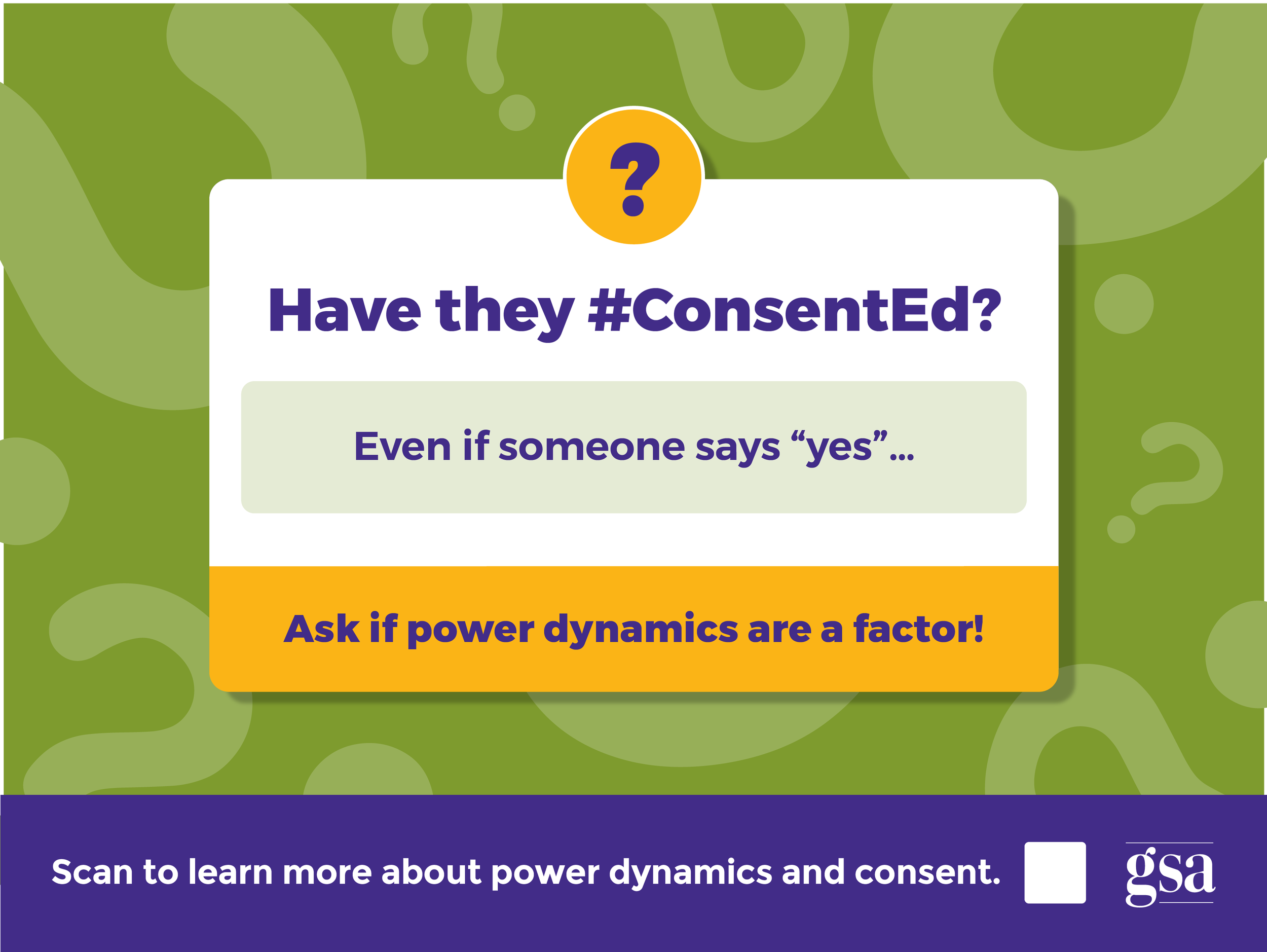
When you are in a perceived position of power, asking someone for a favor can result in unwanted or undesired outcomes for them. Blurred boundaries are a nuanced and complex topic within the broader topic of consent education. Read the following journal article to learn more about perceived power and consent.
Online Consent
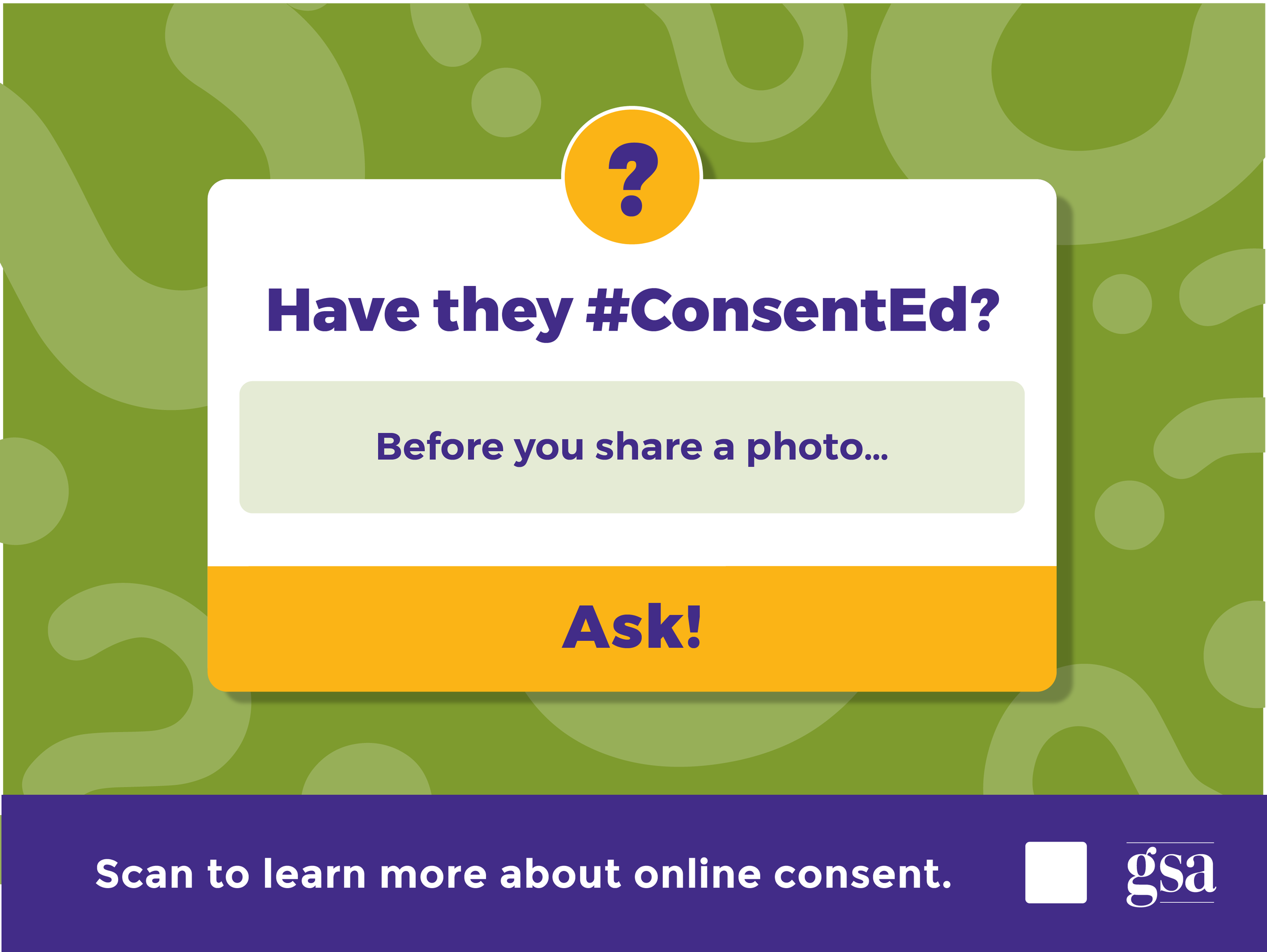
For many folks, particularly for people with intersecting and marginalized identities, harm in online spaces is prevalent. Similar to other forms of gender-based violence, BIPOC, 2SLGBTQQIA+ folks, women, and people with disabilities are disproportionately impacted by technology-facilitated gender-based violence. These forms of harm and violence can include doxxing, sharing intimate images or conversations without someone's consent, stalking, and mobbing.
To learn more about these forms of violence and their impacts, check out the Digital Consent Practices and Technology-Facilitated Violence section on the Laurier website.
Bystander Training
Direct, Delegate, Delay, Distract, and Document. These are the 5 D’s of effective bystander intervention. Regardless of how you choose to intervene, you should always stay with the person harmed until they are safe, and let them know about their options for accessing support or bringing forward a complaint.
Direct
Directly intervene in a situation. Speak up about the harm. Be firm and clear.
Delegate
Get help from someone else. Scan the situation to assess risk and determine how to best intervene. Then, delegate tasks to others around you.
Delay
After the incident is over, check in with the person who was harmed.
Distract
Take an indirect approach to de-escalate the situation. Distracting attention away from the person causing harm to give the person experiencing harm time to move away.
Document
If someone is already intervening and you believe the person causing harm behaviour is escalated, you can document the situation.
Are you interested in learning how to build safer spaces for individuals impacted by gendered and sexual violence?
The Office of Human Rights and Conflict Management is offering a series of nine virtual workshops that focus on building our knowledge and skills to respond to disclosures and build solidarity for survivors. This program will run from September 19th 2022 to February 15th, 2023, and consists of nine workshops. Anyone is welcome to attend any workshop, but students who attend six of the nine workshops will receive a Sexual Violence Response Certificate through their Laurier Experience Record. More information can be found on the Laurier website.